The Four Aches That Keep People From Exercising After 50 — and Why They Shouldn't
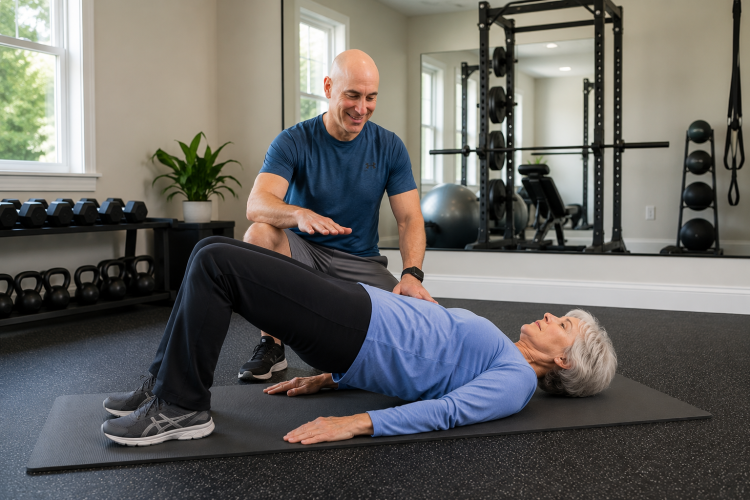
After nearly 20 years of training adults in their own homes across Fairfield County, I have learned that the thing standing between most people and a stronger, more capable body is not a lack of willpower. It is a lack of confidence — usually tied to one specific part of the body that has hurt before. A back that went out. A knee that aches on the stairs. A shoulder that will not reach the top shelf. A hip that stiffens after sitting.
These four — back, knee, hip, and shoulder — are the aches I hear about more than any others. And they share a quiet cost: they don’t just hurt, they stop people from moving. Someone tweaks a knee, decides exercise is too risky, and slowly loses strength everywhere else. The ache becomes a reason to do nothing, and doing nothing makes everything weaker. That is the real danger — not the original injury, but the deconditioning that follows the fear of it.
This post is the overview of a series I am writing on exactly that problem. Over the coming weeks I will take each of these four areas in turn and show you what safe, professional training actually looks like when you have a history there. My goal is simple: to replace fear with facts, and to show you that the right guidance turns an intimidating problem into a clear, safe path forward.
Where My Approach Came From
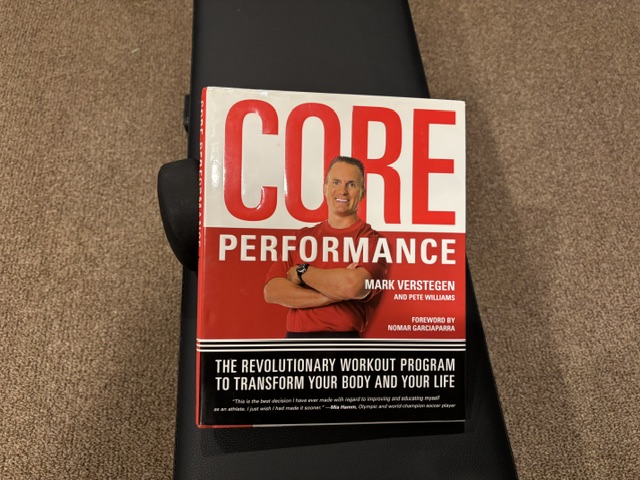
Much of how I train these areas today traces back to something I learned early in my career — a movement-preparation system built by Mark Verstegen, whose 2004 book Core Performance shaped how a generation of trainers thinks about protecting the body. Verstegen founded the training facility now known as EXOS and worked with elite athletes across nearly every sport; the book’s foreword was written by Major League Baseball’s Nomar Garciaparra. What struck me was not the elite-athlete part. It was the idea that a deliberate sequence of movements — done before every session — could prepare the joints, activate the right muscles, and dramatically reduce injury.
I took those principles, and over the years refined them in consultation with physical therapists and chiropractors here in the Greenwich area, into what I now call my DynaFlex series. But I want to be clear about what it actually is, because the word “warm-up” undersells it. After a short 5-to-10-minute warm-up on the treadmill or a brisk walk, we move into the DynaFlex sequence itself — and that alone can run anywhere from 10 to 20 minutes depending on a client’s ability and injury history. On many days it takes up close to half the session. Most of my clients are sweating by the time it’s done.
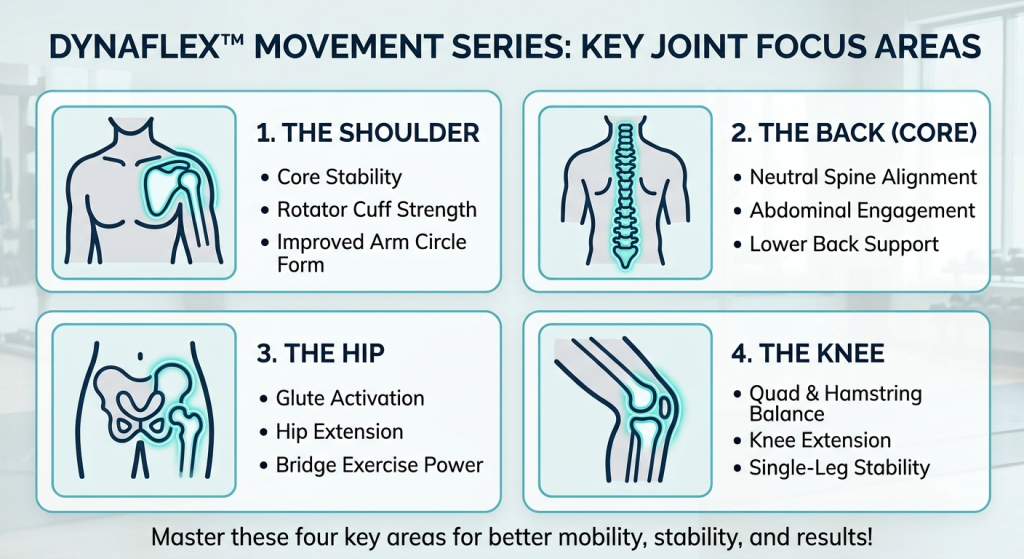
It works through every position. Standing, we do movements like high knees, butt kickers, arm circles, backbend squats, and overhead rotations to wake up the whole body. On the floor, we move through bridging, knee grabs, and “windshield wipers” — knees bent and legs dropping side to side — to open and stabilize the hips and lower back. Face up, we work bird dogs, isolated hip circles, and planks. Face down, we run through swimmers, the Verstegen-style Y-T-W series for the shoulders and upper back, and scorpions. Every one of these is chosen to move and protect a specific joint — the back, shoulders, hips, and knees — while strengthening the glutes, lower back, and hamstrings that support them.
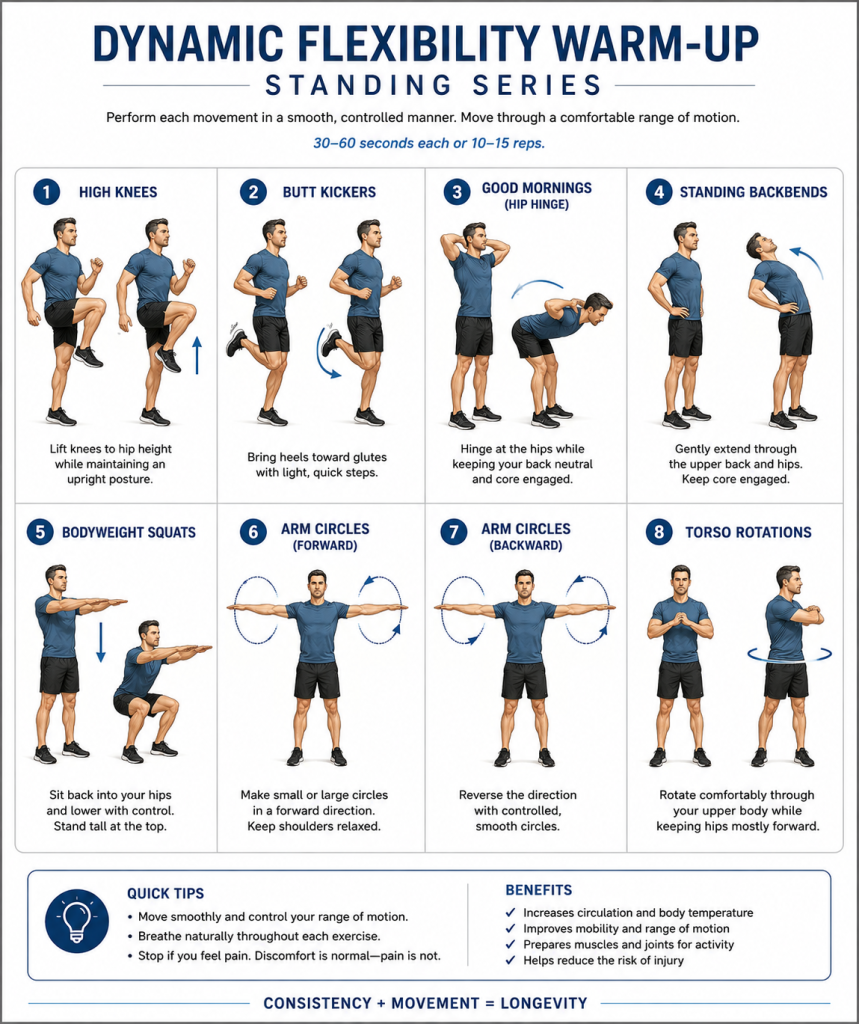
So DynaFlex is not really a warm-up at all. It is a full-body conditioning, toning, and injury-prevention session that happens to also prepare you for whatever strength work follows. It is a blend of flexibility and gentle strengthening — almost like a floor Pilates or yoga sequence, but built specifically to protect joints. And I will be honest about the result: once I made DynaFlex a non-negotiable part of every session, injuries among my clients all but vanished. I still do it to this day, with every client, without exception. You will see it referenced throughout this series, because it is the common thread that runs through safe training for all four of these areas.
The Four Areas — and What's Coming
Here is the series ahead. Each post takes one of these common trouble spots and walks through the same thing: why the fear is understandable, what safe training actually looks like, and how strengthening — not avoiding — is what protects you.
- The Back
The most common of them all, and the one people are most afraid of. A herniated disc, surgery, or a stretch of sciatica leaves a mark that is as much psychological as physical. But your spine is meant to be loaded — appropriately, and with good mechanics — and progressive strengthening is one of the most protective things you can do for it. Read the back injury post here.
- The Knee
The joint people most often assume they should simply protect by avoiding movement — which is usually the opposite of what helps. Strong, balanced muscles around the knee, from the hips down through the hamstrings and quads, are what let the joint move well and hurt less. (Coming soon.)
- The Hip
Often the quiet culprit behind back and knee complaints alike. Hips that are stiff from sitting and weak in the glutes force everything around them to compensate. Restoring mobility and strength here has effects that ripple through the whole body. (Coming soon.)
- The Shoulder
The most mobile joint in the body, and the one most easily aggravated by everyday reaching, lifting, and poor posture. Gentle, progressive work to restore range and build the small stabilizing muscles is what keeps it healthy and pain-free. (Coming soon.)
A Common Thread: Continuation of Care
One thing you will hear me repeat across this series: I do not replace your physical therapist or chiropractor. I continue what they started. Therapy addresses the acute problem and gets you to a baseline — but therapy ends, and the exercises you were given are meant to continue, progressively, ideally under guidance. That middle ground, between the clinic and going it alone, is exactly where a qualified trainer belongs.
Over the years I have built working relationships with physical therapists and chiropractors throughout Greenwich and the surrounding towns, and I use my orthopedic exercise and senior fitness certifications to design programs that pick up where formal rehab left off — rebuilding strength, restoring confident movement, and protecting you against the next injury.
You Do Not Have to Do This Alone
If one of these four aches has been the reason you have put off getting stronger, I hope this series changes that. Each post will show you that the picture in your head — boot-camp intensity, someone pushing you through pain — is not what safe, professional training looks like. The reality is calm, gradual, and built entirely around what your body can handle today.
If you are in Fairfield County and want to continue your care with someone who trains safely and collaborates with your clinicians, contact me here. We can start exactly where you are — gently, and at your pace.
Carlos Perez, M.S. holds a Master’s degree in Exercise Science (Human Performance) from Southern Connecticut State University and is ACE certified as both an Orthopedic Exercise Specialist and Senior Fitness Specialist. He has provided private, in-home personal training to professionals in Greenwich, Stamford, Westport, and Darien since 2006, specializing in safe, efficient strength training for adults ages 45–70.