Introduction — The Power of Steady Progress
Now its time to learn how to progress your strength training safely in Greenwich CT or anywhere you train! Once you’ve built a foundation with gentle strength training, it’s normal to start asking, “What’s next?” You might feel stronger, more confident, and ready to challenge yourself just a little more. That’s exactly where progress begins — not through extreme workouts or pushing past pain, but by making small, smart adjustments that keep your body improving safely.
I’ve seen this in clients of every background — beginners, older adults, and busy professionals — all building strength at their own pace. Whether you train with bodyweight, resistance bands, dumbbells, or TRX straps, you can safely keep improving from wherever you started.
💪 Why Progress Matters
Your body is designed to adapt. When you lift the same weight or do the same workout for too long, progress slows. Gradually increasing your challenge helps:
-
Improve muscle tone and metabolism
-
Strengthen bones and joints
-
Boost confidence and energy
-
Prevent plateaus and keep things interesting
The key is knowing when and how to increase intensity — and doing it safely.
The National Institute on Aging notes that gentle, progressive resistance exercises are among the best ways to maintain independence and mobility as we age.
⚙️ 1. How to Add Intensity Safely
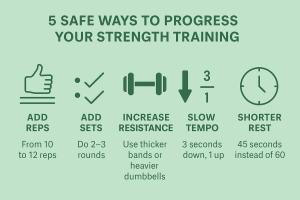
You don’t need to overhaul your routine. Try small, simple changes like:
-
Add a few more reps: Go from 10 to 12.
-
Increase sets: Move from one to two rounds of your circuit.
-
Adjust resistance: Use a thicker band or slightly heavier dumbbell.
-
Change tempo: Slow down your movements to increase time under tension.
-
Shorten rest: Take 45 seconds instead of 60 between exercises.
These gentle tweaks help your muscles work a bit harder without overloading your body.
🧩 2. Signs You’re Ready to Progress
You’re likely ready to move up when:
-
Your last few reps feel comfortable, not challenging.
-
You recover quickly after sessions.
-
You can maintain perfect form throughout your workout.
-
You feel energized, not exhausted, afterward.
If you’re feeling sore or fatigued for days, that’s a sign to back off and let your body adapt.
🕰️ 3. Don’t Skip Recovery
Progress happens during recovery, not just during workouts. Your body needs rest to rebuild stronger muscle tissue and recharge your energy.
-
Aim for at least one full rest day between strength sessions.
-
Focus on nutrition and hydration — adequate protein supports recovery.
-
Gentle stretching or walking on rest days helps circulation and flexibility.
Overdoing it doesn’t accelerate results — it can lead to burnout or injury.
⚖️ 4. Modify Before You Advance
Some weeks, life gets in the way — poor sleep, stress, travel, or illness can affect your energy. It’s okay to adjust!
-
Swap a harder exercise for an easier version (e.g., wall push-ups instead of floor push-ups).
-
Reduce sets or take longer rest breaks.
-
Focus on form and breathing, not just numbers.
Real progress isn’t linear — it’s about staying consistent through the ups and downs.
🌟 5. Mindset: Consistency Wins Every Time
The most successful clients I’ve worked with share one thing — consistency. They show up, even when motivation dips. They don’t chase perfection; they focus on getting a little stronger, one step at a time.
Whether it’s lifting groceries more easily, walking up stairs with confidence, or feeling more balanced — those are all signs that your strength training is working.
💬 Gentle Call to Action
If you’d like guidance on how to progress safely and design a program that grows with you, I’d be happy to help. I offer in-home personal training in Greenwich, CT and online sessions nationwide via Zoom — so no matter where you live, we can keep your progress safe, effective, and motivating.
👉 Next Month’s Blog: Building Flexibility and Dynamic Mobility — The Missing Piece of Fitness