The Trainer’s Plateau: Why a “Perfect” Diet Wasn’t Enough
As a fitness trainer in Greenwich, Connecticut, I’ve spent years helping clients achieve their health and wellness goals through personalized exercise and nutrition programs. I’ve always preached a balanced, well-rounded diet, and for the most part, it’s served me well. At 6’2″ and 209 pounds, my diet was very good by normal standards; I was even intermittent fasting and had reduced my daily carb intake to under 200 grams. Despite these efforts and a diet that was balanced and clean, my weight had been slowly rising over the past few years after maintaining around 200 pounds for the past decade. I’d heard about the keto and low-carb diets, but I was skeptical. Would they work? Was it sustainable? I decided to put my own beliefs to the test and embark on a personal experiment.
From High-Fat to High-Protein: The Keto Shift That Sparked 25-Pound Weight Loss
My journey began in early May. I started by following a traditional ketogenic diet, which emphasizes a high intake of fat and very low carbohydrates. My goal was to enter a state of ketosis, where the body switches from using glucose (sugar) as its primary fuel source to burning fat for energy. Research, such as a 2022 meta-analysis published in the journal Nutrients, has shown that ketogenic diets can be highly effective for weight loss by helping the body burn fat and reduce appetite.
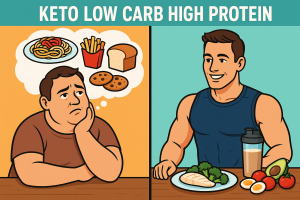
The Scientific Reason Standard Keto Stalled My Progress: I was surprised by how simple it was to adapt to this new way of eating. However, I noticed that the weight wasn’t coming off as quickly as I had hoped. I started to question the high-fat approach. My body was getting plenty of fuel from the fat I was eating, so why would it need to burn my stored body fat? After more research, I discovered a different approach that resonated with me: a higher-protein, moderate-fat, and very low-carb diet.
This approach made more sense. By reducing my fat intake while keeping carbohydrates very low, I could encourage my body to tap into its own fat stores for energy. This is a common strategy that many trainers and nutritionists now advocate. Studies show that a higher protein intake is crucial for weight loss because it increases satiety, reduces hunger hormones, and helps preserve lean muscle mass during a calorie deficit. For instance, a review in the journal Obesity Reviews found that high-protein diets lead to significant increases in fullness and decreases in hunger. This was exactly what I needed to break through my plateau.
The Metabolic Synergy: Why Intermittent Fasting (IF) Supercharged My Results
To further enhance my results, I incorporated intermittent fasting (IF), specifically a time-restricted eating window from noon to 6 p.m. While some might think skipping breakfast is difficult, it was made simple with a morning “bulletproof coffee,” which has a small amount of calories and fat to curb hunger without causing an insulin spike. The scientific community has been increasingly studying IF, with a 2025 review in The BMJ confirming that it is just as effective for weight loss as traditional calorie-restricted diets. This approach also improved my energy levels and mental clarity.
Beyond the Scale: Mental Clarity and Energy on a Low-Carb Diet
The results were remarkable. The weight started falling off, and my energy levels soared. My mind felt clearer, and I was more productive than ever before. This is another area where research has been promising. A 2025 study in the Journal of Clinical Endocrinology & Metabolism showed that a ketogenic diet can increase cerebral blood flow and improve brain-derived neurotrophic factor (BDNF), a protein that plays a key role in learning and memory. This may explain why I felt so sharp and focused.
My New Perspective: Applying This High-Protein Low-Carb Strategy to My Greenwich Clients
As of today, I’m down 25 pounds and I feel incredible. My body fat percentage has decreased, and I’ve gained a new level of confidence in my own ability to transform my body. This experience has not only changed my own life but has also given me a new perspective on how I can help my clients. While a balanced diet is still the foundation of good health, I now have a new tool in my arsenal to help those struggling to lose weight. If you’re ready to break your plateau, explore my Greenwich In-Home Training.
By combining a strategic approach to macronutrients with intermittent fasting, it’s possible to achieve results that once seemed out of reach.
If you are ready to apply a tailored high-protein, low-carb strategy to your own life and accelerate your results, don’t wait. Click here to schedule your free consultation and let’s discuss your personal weight loss goals today!
Research and Citations
- Ketogenic Diet for Weight Loss: A 2022 meta-analysis of randomized controlled trials concluded that a ketogenic diet is an effective intervention for body weight control in overweight patients. Source: “Ketogenic Diet Benefits to Weight Loss, Glycemic Control, and Lipid Profiles in Overweight Patients with Type 2 Diabetes Mellitus: A Meta-Analysis of Randomized Controlled Trails” in MDPI
- Benefits of High Protein Intake: A 2008 review published in Obesity Reviews found that a higher protein intake increases satiety, reduces hunger, and helps in the preservation of lean muscle mass, which are all critical factors in successful weight management. Source: “High-protein diets and their effect on weight and body composition” in Obesity Reviews
- Intermittent Fasting Effectiveness: A 2025 systematic review and network meta-analysis of 99 randomized clinical trials confirmed that intermittent fasting strategies are as effective for weight loss as traditional calorie-restricted diets and may also improve cardiometabolic health. Source: “Intermittent fasting strategies and their effects on body weight and other cardiometabolic risk factors: systematic review and network meta-analysis of randomised clinical trials” in The BMJ
- Keto Diet and Brain Health: A 2025 study found that a three-week ketogenic diet increased cerebral blood flow and brain-derived neurotrophic factor (BDNF), which is associated with improved cognitive function. Source: “A three-week ketogenic diet increases global cerebral blood flow and brain-derived neurotrophic factor” in the Journal of Clinical Endocrinology & Metabolism